Getting there, doors, what to wear
Opera House night: what to know
The practical guide to a concert at the Sydney Opera House: getting to Bennelong Point, the single entrance, doors, bags, dress, late arrival and access.
Reserve your seats at the Opera House ↗Quick answer
Go to Circular Quay, which buses, trains and ferries serve, and walk to the Opera House. Every ticketholder enters at one point under the Monumental Steps, where bags are screened. Ushers close the theatre doors at show time, there is no mandatory dress code, and filming and photography are not permitted inside the venue.
Getting to Bennelong Point
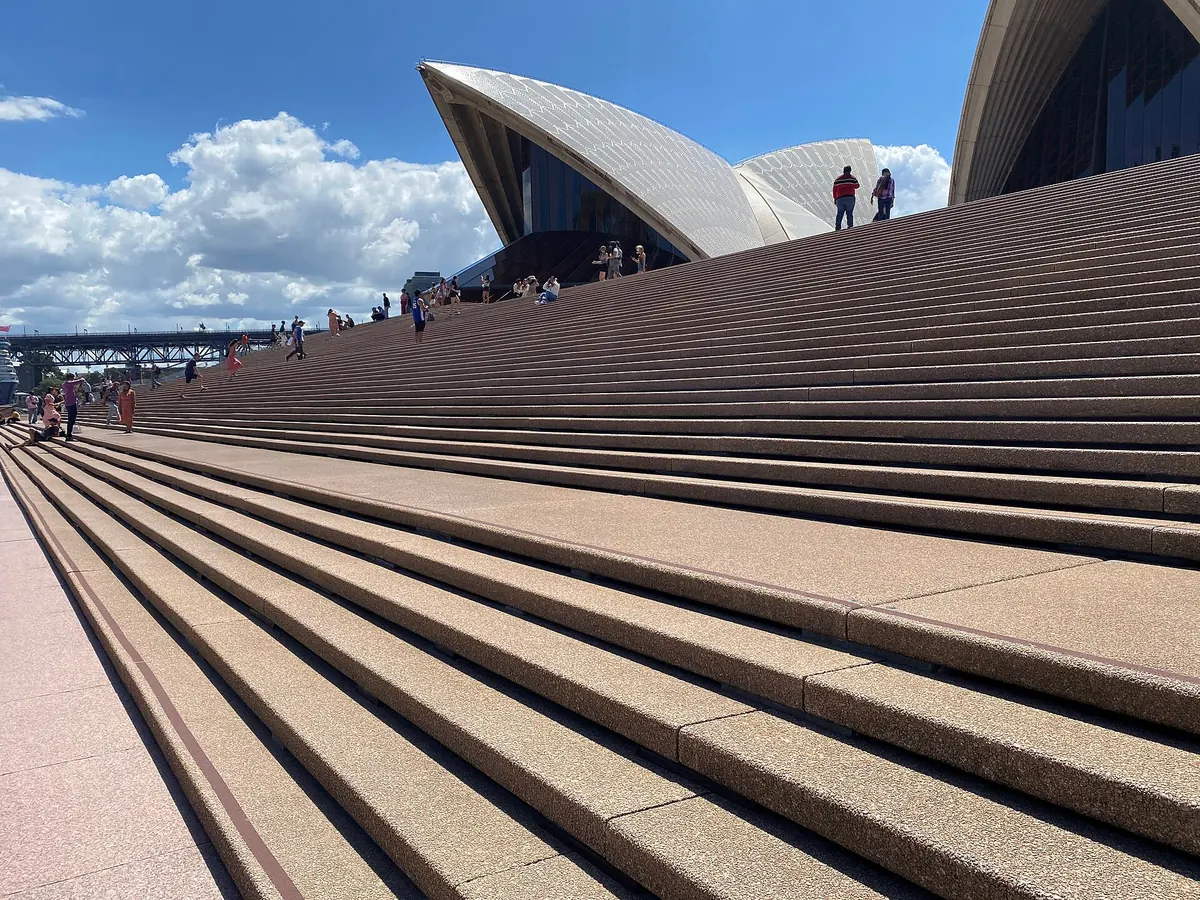
The Sydney Opera House says it is a short walk from Circular Quay, which is regularly served by public buses, trains and ferries. Circular Quay is a harbour, a public piazza and a transport node on the northern shoreline of the city centre, between Bennelong Point and The Rocks, with ferry wharves, bus interchanges and a railway station. Circular Quay is often called the gateway to Sydney, with views of the Harbour Bridge and the Opera House. Transport NSW plans journeys across Sydney. The Opera House's own pages give slightly different walking times from the Quay, so treat any minute figure as a guide and leave margin. Allow for the walk and for the queue at the entrance, because latecomers can be held until the performance pauses.
Courtesy bus and taxis
The Opera House runs a free wheelchair accessible courtesy bus between Circular Quay and the Opera House doors for matinee and evening performances. It is also described as a transit shuttle for elderly and less-mobile passengers. Taxis and private vehicles are directed to the designated taxi rank on Macquarie Street, because the Opera House has removed almost all vehicle movements from the Forecourt. Taxis can be hailed from the taxi stand at the end of Macquarie Street after performances. The Opera House says the service is designed to make the journey to and around the precinct accessible. If you or a companion find the walk difficult, the courtesy bus is the simplest option, and the Opera House's access pages list further services for people with disability.
Driving, cycling and parking
Wilson Parking's Sydney Opera House Car Park is open 24 hours a day, seven days a week, with undercover access to the Lower Concourse. It is reached from the northern end of Macquarie Street. Bicycles, scooters, skateboards and other non-motorised vehicles must be dismounted at the Opera House site boundary and walked, carried or parked while on site, and bicycle parking is located beneath the Monumental Steps. The Opera House supports sustainable transport by providing facilities on site to park bikes safely. The forecourt and the steps can be busy, because the Opera House welcomes a great many visitors every day. If you only need the evening, public transport avoids the parking question altogether.
The single entrance and bag screening
Entry to venues inside the Opera House, including the theatres, the Utzon Room, the Centre for Creativity and the Bennelong restaurant, is via a single entry point under the Monumental Steps. All ticketholders must present their bags and personal belongings for visual inspection or x-ray screening before entering. The walk-through scanners are safe for patrons with pacemakers, cochlear implants or similar devices, and security can offer alternative screening if you ask. The Opera House is also a smoke-free site, so smokers should finish before they reach the steps. The Monumental Steps lead from the Forecourt to the Podium Level below the sails, and the Opera House says Badu Gili, the Lighting of the Sails, is best viewed from the upper level.
Doors, foyers and your seat
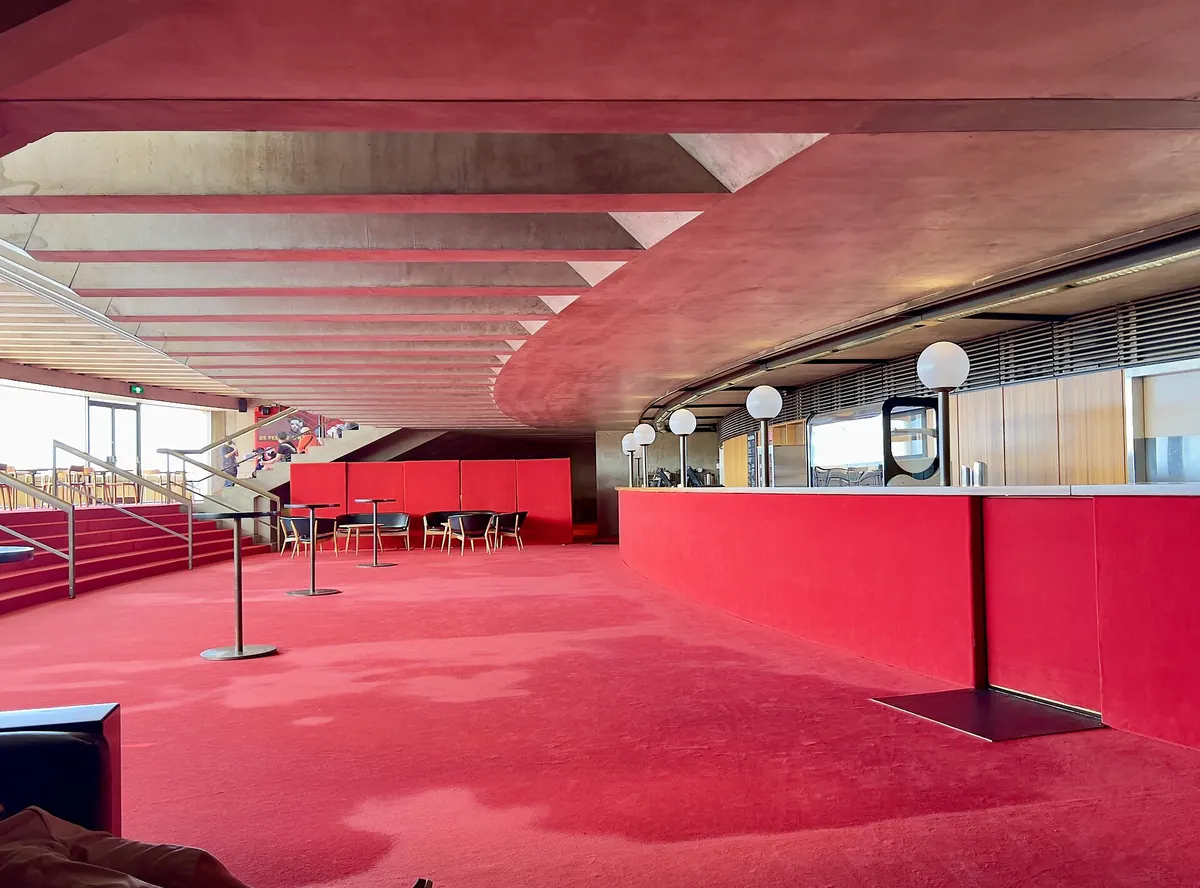
The Opera House says foyer doors usually open well before a Joan Sutherland Theatre performance, and theatre doors open later. The theatre is on the northern side of the foyer, to the left of the stairs leading to the Concert Hall, and is best reached through the covered concourse. Lifts serve the main and western foyers, and the foyers are open before the show so you can buy refreshments. If you collect tickets from the Box Office, the Opera House recommends allowing a generous margin before the event starts. Your confirmation shows the date and the start time, so work backwards from it rather than from a time you remember. The theatre's seating areas are named Stalls, Dress Circle, Loge and Boxes.
Cloakroom and what to carry
The Opera House has a cloakroom that opens before the show, and it strongly encourages you to travel lightly. Larger items, including handbags bigger than A4 size, backpacks, umbrellas, suitcases and prams, are not permitted inside the venues and must be cloaked. Check your bag against the A4 size before you leave your hotel. Suitcases must be cloaked too, so travellers arriving with luggage should leave it at their accommodation first. Pram parking is available outside the theatres, and all the foyers are accessible to prams. Take photo ID with you, such as a passport, an ID card or a driver's licence, and leave the camera at home. Drinks and snacks have their own rule, covered below, and the cloakroom rules are the same for every performance in the building.
What to wear
There is no mandatory dress code. An extra layer of clothing is recommended for comfort, so a light jacket or cardigan in your bag is enough, and smart casual is a safe middle if you want to dress for the occasion. Comfortable shoes help with the walk from Circular Quay and the steps up to the entrance, and most visitors cross the forecourt on foot, so footwear matters more than anything else you choose to wear. Opera Australia calls its Great Opera Hits concerts relaxed, which fits the lack of a dress code. The Opera House sets no other rule about clothes. The bag rules matter more than the dress question.
Phones, photos, and children
Filming and photography are not permitted inside the venue unless authorised, and a mobile phone must be switched off or put on silent in the venue. The Opera House asks audience members to be mindful of those around them and to keep disturbances to a minimum, and says that ticketholders who interfere unreasonably with another's enjoyment may be asked to leave. Children aged 15 years and under must be accompanied at all times. If a child becomes unsettled, step outside until they settle, and note that you may not be readmitted until there is a suitable break in the performance. The Opera House also publishes a child safety policy and a child-friendly code of conduct.
If you arrive late
Ushers close the doors at show time and may not allow latecomers in until there is an appropriate pause in the performance. The Opera House says it will aim to seat you as soon as it can and, where possible, in your allocated seat, but it may place you in an allocated latecomer's seat. Where an event has a lock-out period, latecomers are admitted at a suitable break in the performance, which may not be until the interval, or at all where there is no interval. Great Opera Hits has one interval, so the wait for a late arrival could last until then, which is why the practical advice is to arrive early. Details of the Opera House's right to refuse admission are in its general terms and conditions for tickets and events.
Before and after
The Opera House lists several places to eat and drink on site, including the Bennelong restaurant, Midden by Mark Olive, Opera Bar and Winnie's. Bennelong is described as the award-winning fine-dining restaurant, Midden by Mark Olive serves contemporary Australian cuisine infused with native ingredients, and Winnie's is an all-day dining destination on the Lower Concourse. Refreshments are also sold at the theatre bars. Drinks bought there must be consumed in the designated foyer spaces and cannot be taken into the venues unless otherwise advised. Check the hours of any restaurant on the Opera House's page before you plan a meal around the concert, because opening times and menus change.
Access, and who this isn't for
The Opera House says there are wheelchair and companion seating locations in all its theatres, booked through its Box Office, and that the site offers services for people with disability. Patrons who are deaf, hard of hearing or have a speech difficulty can use the National Relay Service at no cost to contact the Opera House. Some seating locations in the Joan Sutherland Theatre have significant amounts of stairs, and the Opera House publishes step counts for each seating area on its mobility page. The evening does not suit anyone who cannot be on time, wants to photograph the singers, or needs to bring large bags without cloaking them.
Frequently asked questions
How do I get to the Opera House?
Go to Circular Quay, which is regularly served by buses, trains and ferries, then walk the short distance to the Opera House.
When do the doors open?
Foyer doors usually open well before the show and theatre doors open later. Your confirmation shows the show time.
What is the dress code?
There is no mandatory dress code. An extra layer of clothing is recommended for comfort.
Can I bring a backpack or umbrella?
Not inside the venues. Backpacks, umbrellas and handbags bigger than A4 size must be cloaked.
Can I take photos?
No. Filming and photography are not permitted inside the venue unless authorised, and phones must be off or on silent.
What if I am late?
Ushers close the doors at show time. Latecomers may wait until an appropriate pause in the performance, which could be the interval.
Sources